
As emulation software becomes more sophisticated and intuitive, automation engineers develop virtual models with greater speed and efficiency. Whether using proprietary software tools, like RobotStudio®, ROBOGUIDE, and Motosim, or open sources like Gazebo, Robot Operating System (ROS) and CoppeliaSim (formerly V-REP), robot simulation platforms improve our ability to program, test, and deploy robots ahead of development schedules. In today’s Tech TalksTM blog, we unpack the trend toward advanced dynamic digital twins which take machine building, controls programming, and virtual commissioning to the next level.
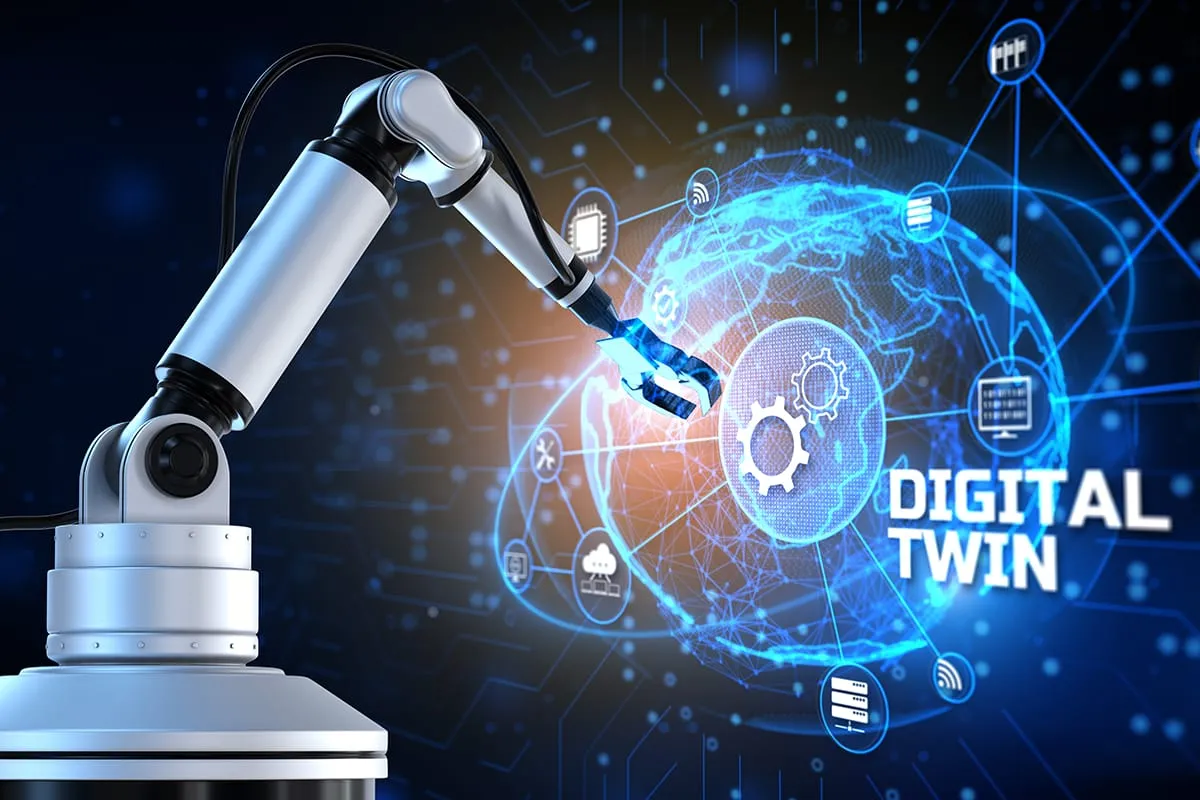
What is a digital twin? Although it may evoke avatars or artificial intelligence, within engineering we’re talking about a virtual version of a real physical object or a system – an exact duplicate created in a virtual space. Its starting point might be a 3D CAD model, but it’s more complex than that. A true digital twin comprises a computer model with a bidirectional data connection between a physical object, its sensors, and its virtual twin. Engineers use that connection to study, test, and change the physical object or system.
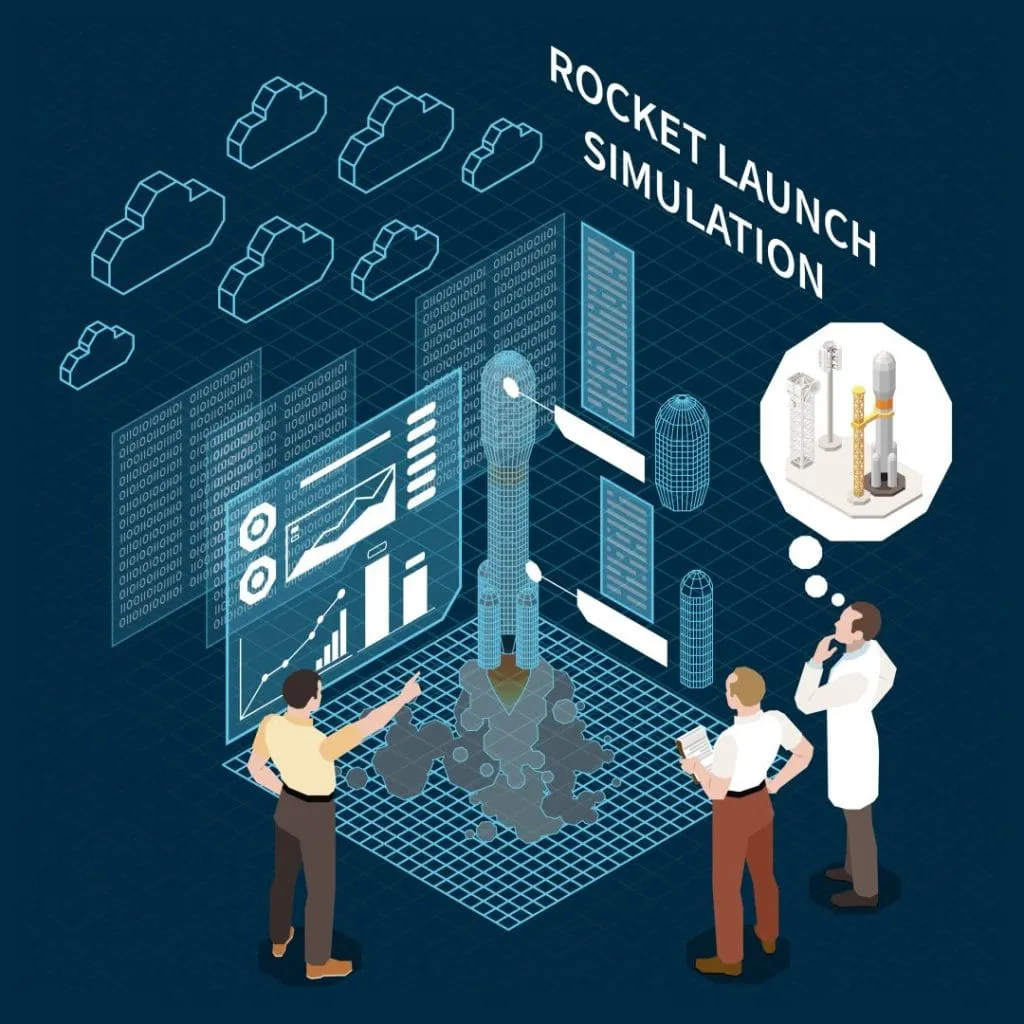
Spacecraft simulators are a type of digital twin that aerospace engineers use to test performance or recovery procedures ahead of actual mission launches.
Using computer models, engineers run simulations with a physical replica of a spacecraft. They can then modify control flight parameters through connections to pilot controls, instrumentation, sensors, and systems.
Digital twins and virtual simulations have evolved with the rise of the Internet of Things (IoT), Artificial Intelligence (AI), and big data. Today, enterprises now manage sophisticated virtual systems that enable the real-time monitoring of manufacturing operations.
Within manufacturing automation, we have access to simulation and emulation software that combines 3D CAD, proprietary assemblies, and component-level models. Moreover, a software’s physics engine enables dynamic testing of kinetic interactions within the model. We can combine different models to study not only the concept and the design, but also the performance of a machine, system, or assembly line.
Consequently, we can refine and perfect the position, interaction, movement, and speed of components, robots, flow of material and assemblies, and more.
With robot simulators, a dynamic digital twin helps us shorten development cycles by optimizing our build ahead of time and in parallel with evolving design modifications. Even in the area of product development engineering, digital twinning can help with proof-of-concept modeling. In addition, we can examine lifetime performance and plan for Design for Manufacturing (DFM) objectives.
In essence, we can de-risk entire systems in a risk-free virtual environment before we build anything – before investing time and resources into the physical build.
EXPLORE
Go deeper to understand digital twin technology.
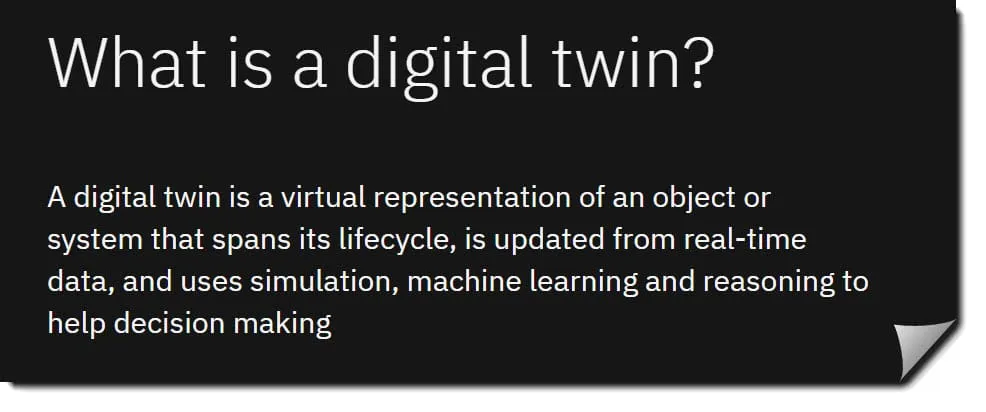
RESOURCE CREDIT: IBM | What is a digital twin?
One of the more advanced aspects of digital twinning is the ability to conduct virtual commissioning using a virtual PLC. During Factory Acceptance Testing (FAT), we demonstrate machine functionality and fulfillment of our client’s requirements. However, waiting until the end stage of a project to fully integrate all controls, test connections, and refine movement speeds and intervals is no longer necessary with a virtual commissioning approach.
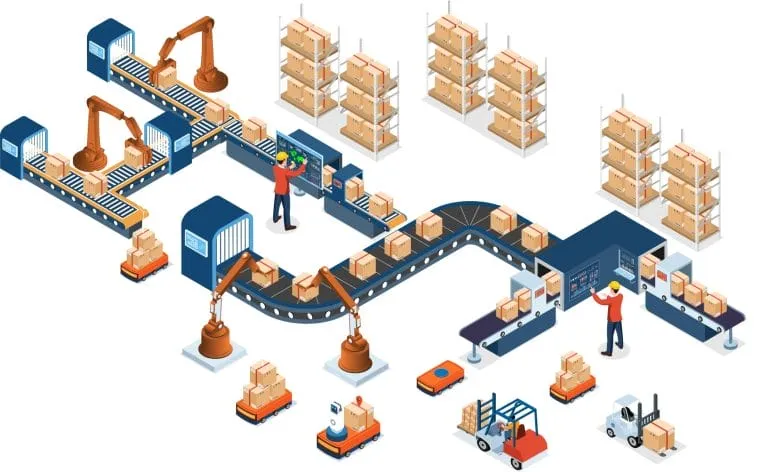
Using a dynamic digital twin, we can:
EXPLORE
Learn more about simulation vs. digital twin technology.
RESOURCE CREDIT: TWI Blog | Simulation vs Digital TwinIBM | What is a digital twin?
At a high level, here’s a quick snapshot of some of the capabilities and advantages of dynamic digital twin software within the categories of machine building, controls testing, and throughput testing.
Taken together, a robust dynamic digital twin and virtual commissioning approach reduces development time and saves resources by de-risking and perfecting your automation solution ahead of your completed build.
The use cases for dynamic digital twins and virtual commissioning are undoubtedly plentiful. Developers frequently start with a digital twin before innovating or installing new manufacturing techniques and equipment. Across the automation industry, automotive, SpaceTech, and MedTech manufacturers leverage virtual simulations to test concepts and analyze processes before manufacturing.
With these advantages in mind, would your project benefit from virtual de-risking before you invest? Do you need a virtual proof-of-concept for an automated robot or machine solution?
It’s an exciting time to innovate with powerful digital twin technologies! How can we help?