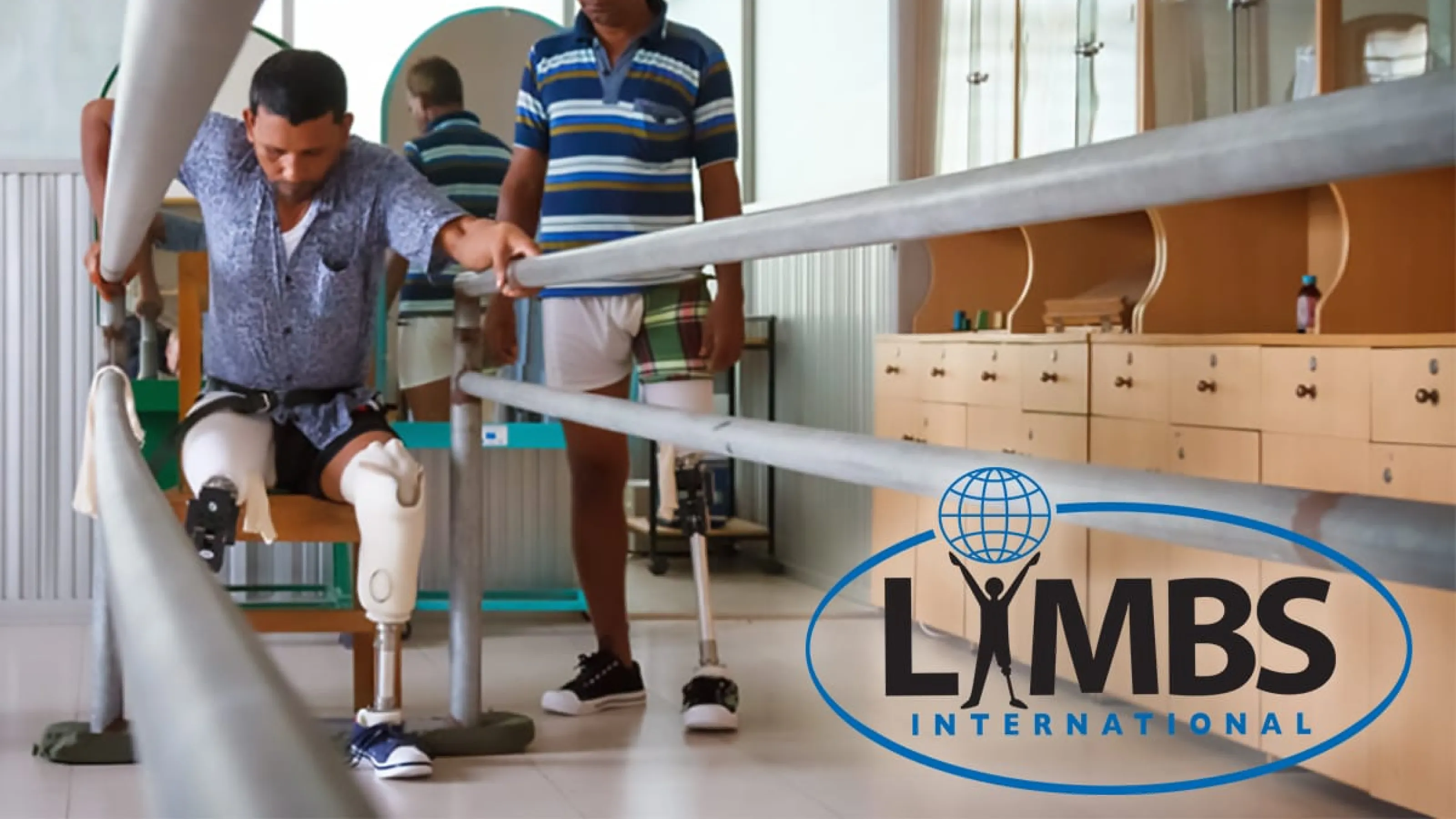

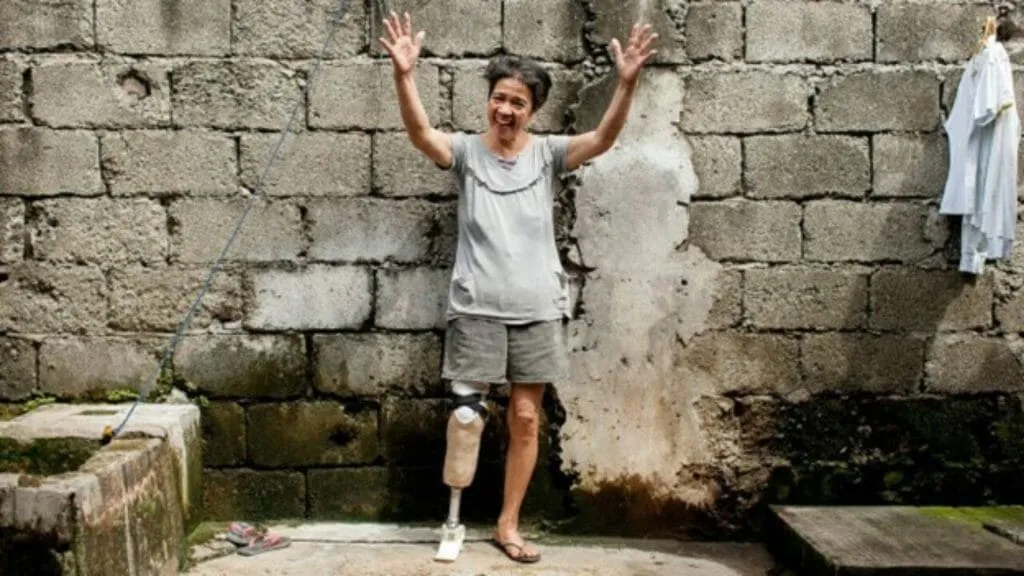
Did you know there are 30-40 million amputees in low and middle income countries? But only 5% have access to prosthetic devices or assistance? These are stunning statistics. For millions of people in the developing world, becoming an amputee through accident, infection, substandard medical care, diabetes, war, or natural disaster means greater hardship – the kind we don’t typically see or appreciate. From job loss and poverty to being rejected by their societies as outcasts, their life challenges are immense.
Thankfully, because of the charitable prosthetic engineering work of LIMBS International, there is hope for the disadvantaged 95% that do not have access to affordable prosthetics.
“In the developing world, losing a leg is devastating – because the ability to walk means everything. It is the beginning of a cycle of hardship resulting in the loss of jobs, family and friends, self-esteem, social acceptance – and ultimately, hope.”
– LIMBS International
Back in 2004, engineering professor, Roger Gonzalez, Ph.D., at LeTourneau University in Longview, Texas, recognized that most of the research and development effort in the world was focused on costly solutions developed for that 5% of high income countries. So he “challenged a group of students to create an inexpensive, highly functional knee that could be fabricated using simple materials and tools, right in the countries where they were desperately needed.”
The result: the first LIMBS prototype of a polycentric knee, which was field-tested in Kenya by the team and garnered positive feedback from patients and clinicians.
Hence, LIMBS International was founded as a nonprofit to develop high-quality prosthetic technologies that are affordable and accessible to amputees in the developing world. Through their dedicated charitable work and prosthetic development, over 10,000 low-income amputees in 50 countries have received affordable prosthetic devices to date.
But they don’t stop there. A key component to their success is their focus on creating effective and holistic partnerships in the field so that the local needs of amputees in low and middle income countries (LMICs). They work to ensure appropriate and accessible prosthetics are uniquely coupled with rehabilitation support. As a result, amputees not only recover the ability to walk and find employment but also regain social acceptance and a hopeful future.
LIMBS continuously innovates and improves their prosthetic designs to fulfill their mission of delivering highly functional but ultra low-cost prosthetics. Over the years, LIMBS has fostered productive relationships between engineers, prosthetists, and students to ensure the high quality of prosthetic designs that amputees depend on in their daily lives. We’re proud to say that one of those engineering relationships is with Andrews Cooper.
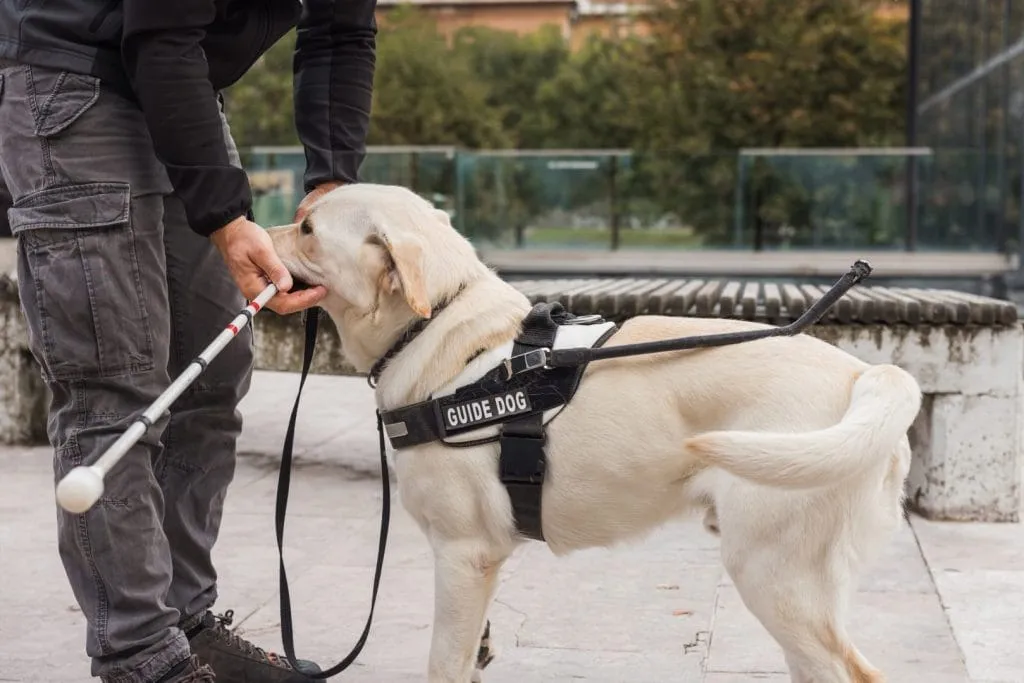
As it happens, one of AC’s Program Directors and one of LIMBS Executive Board members met at a training event for guide dogs for the blind and visually impaired. It wasn’t long before their shared interests and values turned into an opportunity to collaborate between their organizations.
At that time, AC’s Bothell office in Washington state had expanded to offer new capabilities in custom automation design and testing. We could see that a volunteer partnership would perfectly couple our relevant MedTech engineering expertise and resources with our cultural values to be a force for good in the world.
Stepping into this partnership opportunity, Mechanical Engineer Danielle Kuyltjes volunteered to lead the engineering team for AC, applying our hardware testing and mechanical design capabilities to support LIMBS’ development efforts. She recalls:
“We were excited to support such a great cause – the work LIMBS is doing is so meaningful. As engineers, we can make a significant difference by supporting them. Our initial effort was to improve the consistency of the bend and swing movement of their ultra-low-cost prosthetic LIMBS Knee. As our teams worked together over the course of the first year, we were able to identify design improvements, but then a secondary objective began to surface: the need for a better way to perform repeated cycle testing with the changes we were developing together.”
Danielle’s insight highlights the early challenges that shaped the direction of the collaboration. From LIMBS’ perspective, the evolving design needs made it clear that more robust testing tools were essential.
“We explored many ideas with Andrews Cooper and they helped us improve the new LIMBS Knee prototype by making friction more consistent throughout the range of movement and over time. We are able to perform certain types of tests at LIMBS, but ultimately we realized we didn’t have a lot of ways to properly test the prototypes the way we wanted. That’s when we explored the need and requirements for a Cycle Tester.”
-Lucas Galey, Director of LIMBS International
LIMBS’ primary objective was to develop a prosthetic knee that was both highly adaptable and extremely low cost—making it accessible to users in underserved communities around the world. To ensure durability and reliability, they needed a way to rigorously test the knee joint’s performance over time.
Recognizing the complexity of that challenge, Mechanical Engineer Danielle Kuyltjes drew on her medical device experience to assemble a cross-functional team of senior mechanical and controls engineers at AC. Together, they began defining the key requirements for a first-generation LIMBS Knee Cycle Tester—one that could deliver actionable insights while remaining cost-effective and adaptable to evolving prototypes.
At a high level, the tester needed to support:
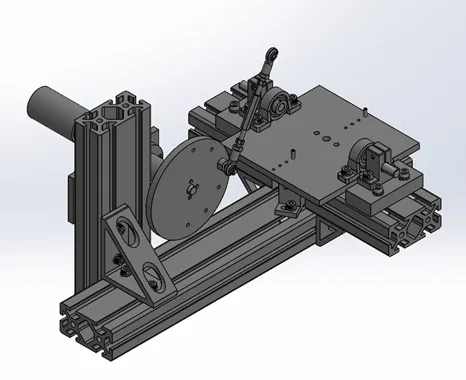
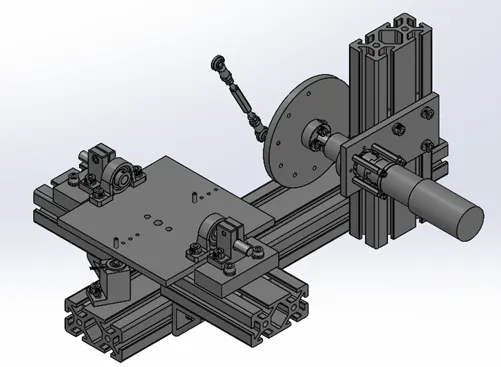
As the project evolved, more AC engineers joined the effort, collaborating with LIMBS to define key performance objectives that balanced rigorous testing needs with low-cost constraints.
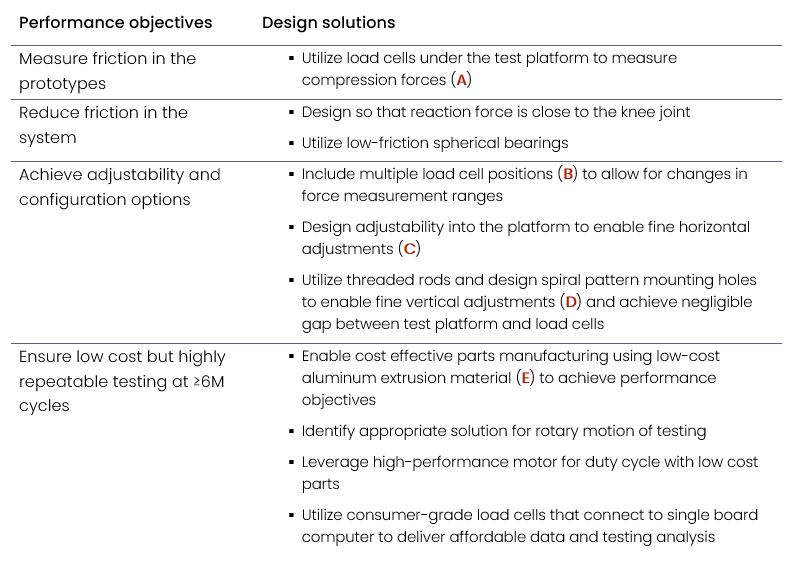
The team translated these goals into practical, resource-efficient design solutions. The table below maps each objective to its solution, with callouts in the image showing how they were implemented in the final tester:
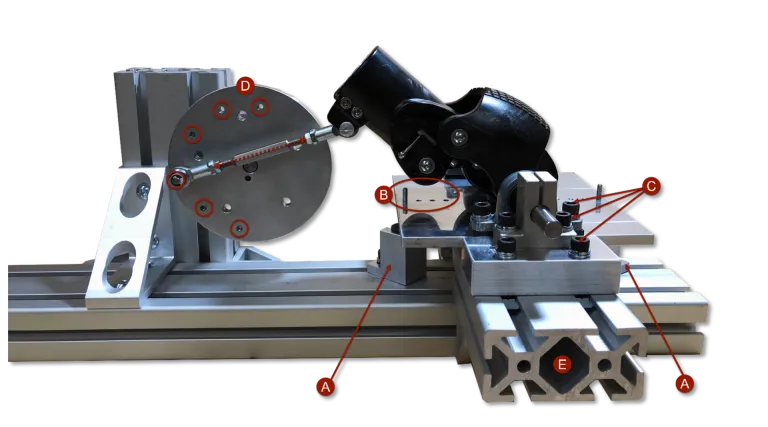
After months of collaborative development and problem-solving, the first-generation LIMBS Knee Cycle Tester was successfully deployed. The video below shows the low-cost tester in action—designed for adjustable configurations and capable of running durability tests across millions of cycles:
The LIMBS cycle tester continues to support their ongoing product development efforts by enabling reliable, repeatable testing that informs material selection, mechanical refinement, and long-term durability.
By applying modern engineering methods and accessible technologies, LIMBS is advancing its mission to deliver affordable, high-quality prosthetics to underserved communities—while maintaining consistent quality throughout design, testing, and training.
This alignment of practical engineering and humanitarian purpose continues to strengthen LIMBS’ ability to scale access to reliable prosthetics worldwide. As Lucas Galey, Director of LIMBS International, explains, rigorous testing is essential to ensuring each design generation delivers meaningful, real-world impact:
"It’s important that LIMBS technology evolves from a rigorous design approach and adequate testing before we release new generations into real-world situations that directly impact the daily lives of amputees around the world. AC’s engineers helped us develop an adaptable way to rigorously test current and future design prototypes. Our partnership bolsters LIMBS own continuous improvement process within our product development team. Most of our design work has been on our own, but we also seek out highly skilled experts like AC to ensure that our analysis and testing is thorough and process-driven. This approach is highly effective and enables us to measure and ensure the performance of our designs as they evolve over time. We want to see better and better performance and maintain ultra low-cost impacts for the patient with each new generation."
- Lucas Galey M.S., Director of LIMBS International
AC celebrates LIMBS for their unique blend of engineering innovation and global compassion. Our founders, Neal Andrews and Steve Cooper, built a culture that values excellence, teamwork, and using engineering to make a positive impact. LIMBS’ mission aligns deeply with those values.
Our thanks to AC engineers who shared their expertise and time to support LIMBS through this rewarding partnership! We would like to recognize the following individuals: Levi Haupt, Danielle Kuyltjes, Peter Van Tamlen, Steve Frankovich, Scott Britt, Shawn Daniel, Cody Severson, and everyone in our Product Development and Automation teams who contributed to this effort.
AC supports volunteer participation through charitable PTO and contribution opportunities—so our engineers can continue to support meaningful missions like LIMBS.