
We partnered with Amazon to engineer Vulcan Stow's deployment at scale.
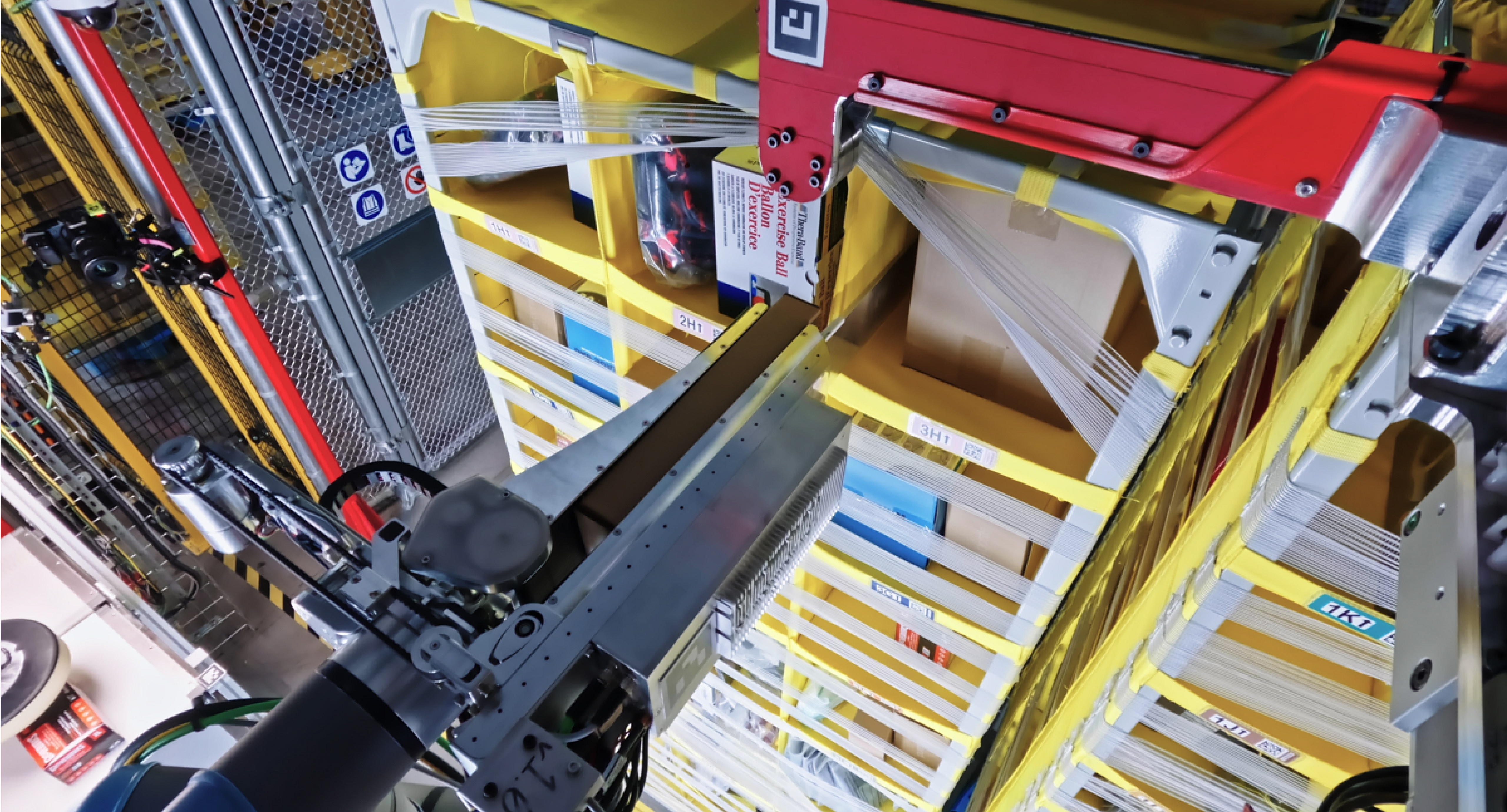
Vulcan Stow is a robotic system that lives in Amazon fulfillment centers, picking and stowing roughly 75% of the item types Amazon stores. Fulfillment centers hold inventory in tall, fabric-covered shelving units divided into foot-square compartments, each designed to hold a handful of loose, unboxed items. Our challenge was retrofitting Vulcan Stow into fulfillment centers that were already built and running, an automation project that needed to scale into the thousands. The first version of the workcell was initially designed by another firm, but it fell short on how widely it could be deployed, how hard it was to install, and how well it ran. Amazon’s team was full of robotics talent, including engineers from NASA and JPL, and we joined to help turn it into a design that could be built and installed as a thousand identical systems.
Our engineers worked embedded in Amazon's team on the mechanical and systems work that made that possible, including the workcell hardware, the item-transfer system, and the pod-queue layout it depends on.
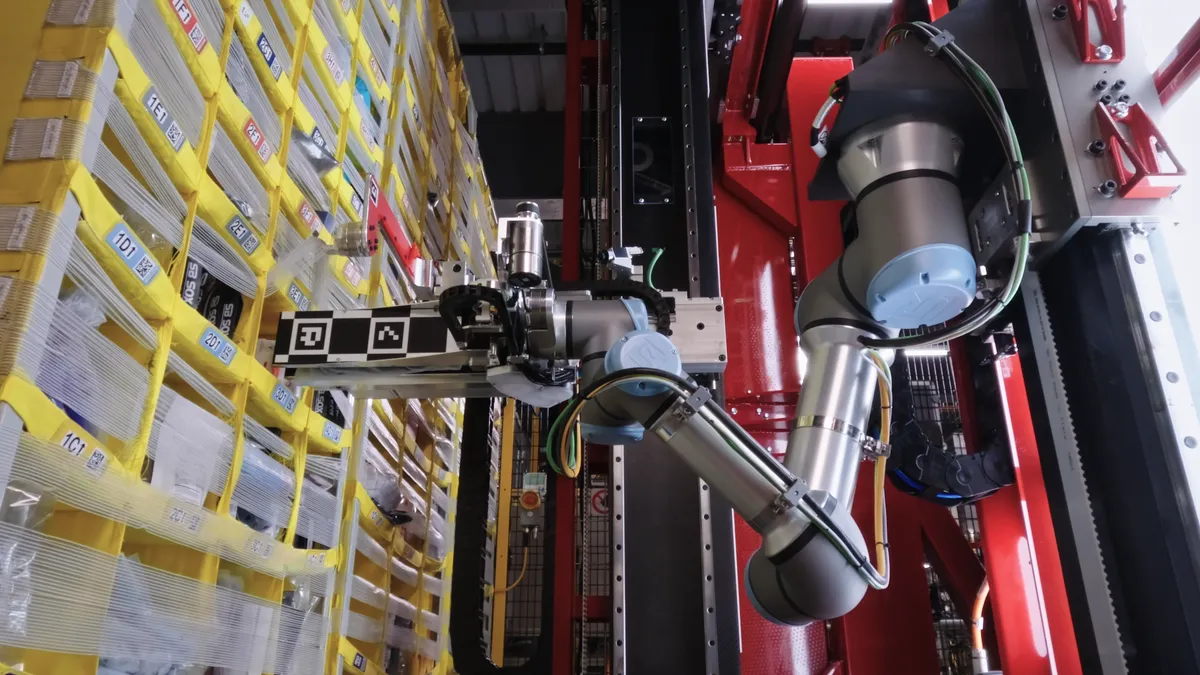
When we stepped in, Amazon was installing its first heavy, machined-steel workcell: rigid, but taking three to four weeks per unit to install, and too expensive to build at the volume Amazon needed. The original weldments only held their tolerances because they were machined flat afterward, a slow, expensive step that made sense for a handful of units but not thousands. Working with the Amazon engineer who owned the workcell design, our engineers helped redesign it as a sheet-metal frame, building the same rigidity and accuracy into the parts themselves so it no longer needed the extra machining pass to perform. The result was a frame that could be manufactured at the volume Amazon's rollout demanded.
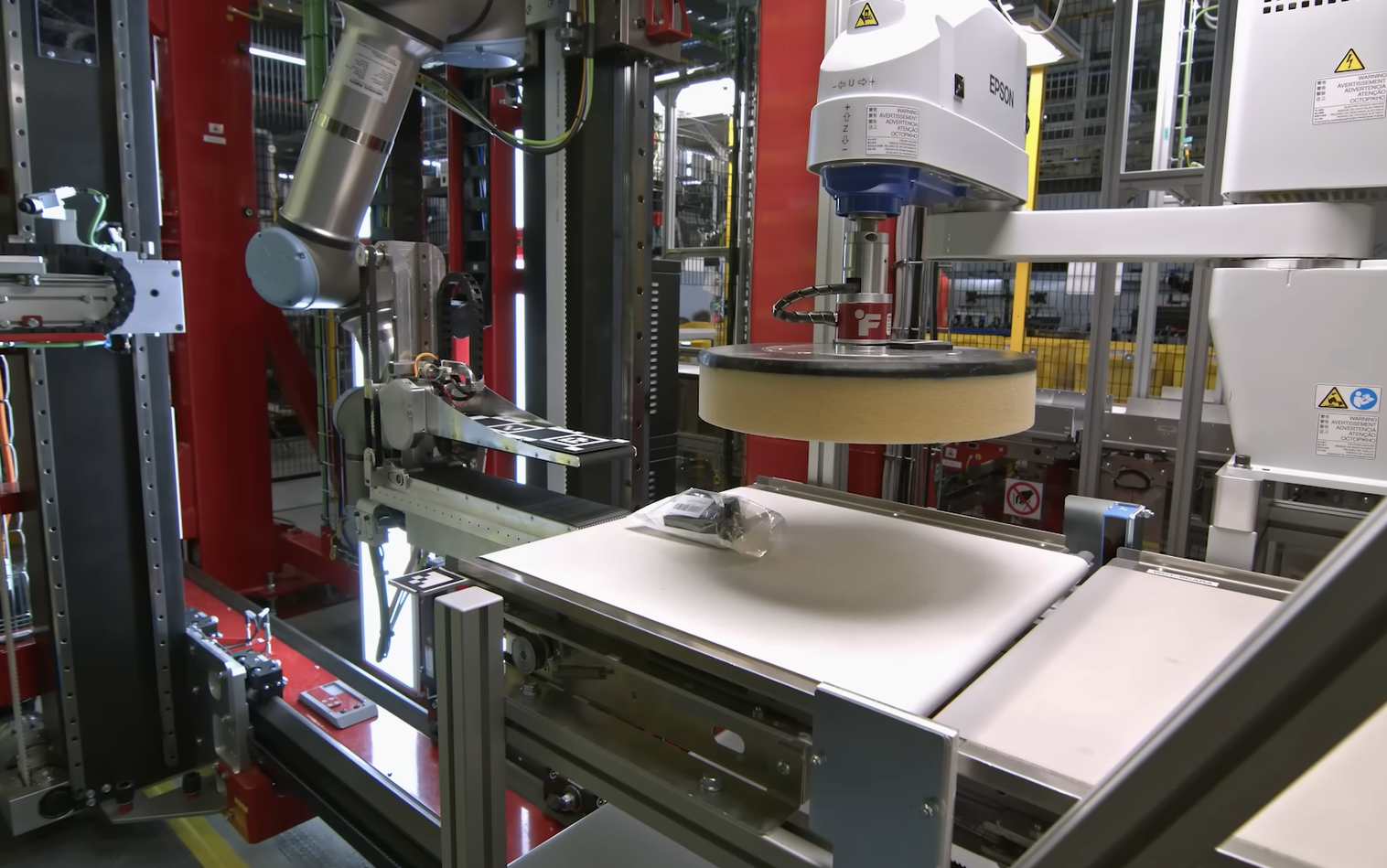
The transfer system moves each item from a single inductor into three separate workcells, on conveyor modules that have to connect to each other precisely. We worked on this subsystem as part of a mixed team of Amazon engineers. Every gap between those modules had to satisfy two competing constraints: the gaps had to be narrow enough to prevent draw-in hazards and small items from falling through, and each gap had to be wide and compliant enough to accommodate installation position variability for the interfacing equipment. To solve this problem, we designed connecting hardware that keeps each gap within a safe range while still accommodating for slight flex and easy installation.
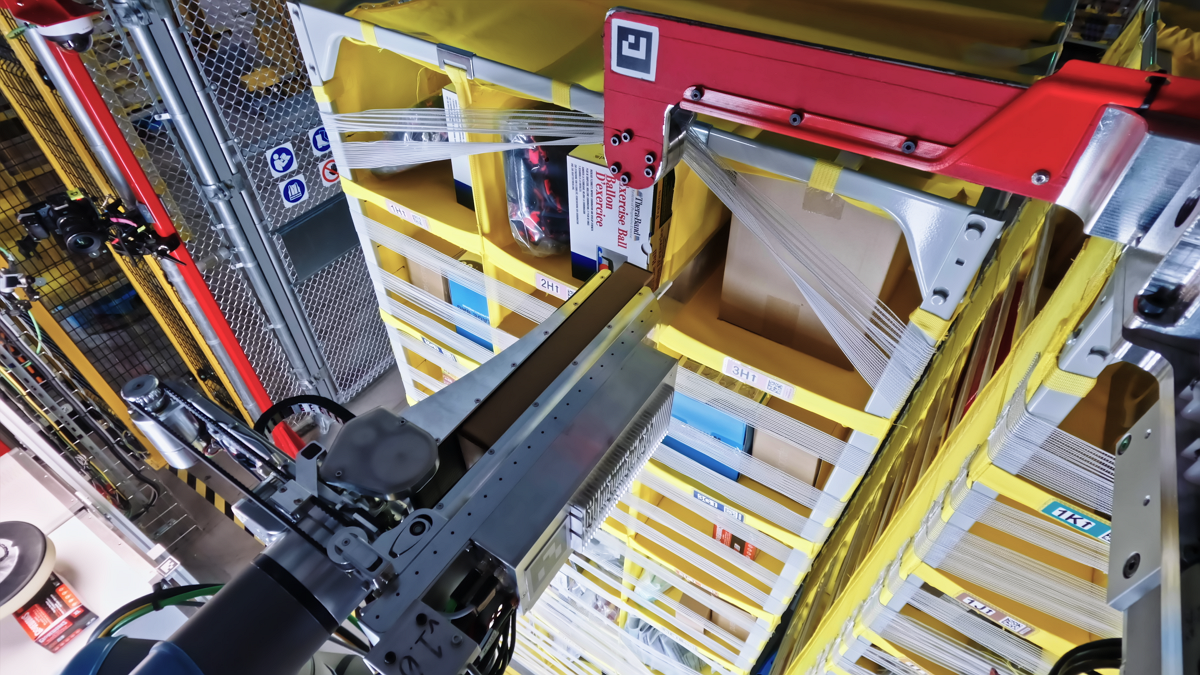
Retrofitting Vulcan Stow required a pod-queue layout Amazon had never used before, one that could keep a pod always ready for the workcell without backing up traffic on the rest of the fulfillment-center floor.
Working with Amazon's systems team, our engineers helped verify it in three stages: a computer simulation modeling throughput from individual component timings, a floor-level simulation built with a partner team using real fulfillment-center data, and finally a physical mini-queue built inside a live fulfillment center in Spokane, cycling real pods under different load conditions to find where the system would break. Because there was no existing layout to validate against, and a wrong design would slow down a fulfillment center that couldn't afford to stop, verification ran over the span of two years before the layout went live.

Tyler Kenney
Senior Mechanical Engineer
Any Integrated Engineering Team (IET) engagement depends on more than technical delivery. Because we were operating as an extension of Amazon's team, trust had to be earned by matching their pace and their standards, not just meeting a spec. Amazon's accelerated pace also meant that each new prototype arrived before the last one's results were fully understood, so design decisions had to keep moving as new data came in. That pace meant our engineers needed to move fluidly between different parts of the program, and be flexible as needs shifted.
Our embedded engineers worked inside a Vulcan Stow program of more than 150 people. Despite Amazon's size, we built a close working relationship with their engineers, treated as one team rather than outside contractors, which let us take on real ownership and match their drive for speed without giving up quality.
Mechanical Engineering
Systems Engineering & Controls
Test, Validation & Reliability
Manufacturing & Production Engineering