
The recent news that Japanese investment firm SoftBank is acquiring ABB’s global robotics division for ~$5.4B is more than a headline transaction. It may well mark the inflection point for the “physical AI” era in industrial automation.
Here’s what it means for the Automation industry, and why we should sit up and take notice.
Robotic arms have long been reliable, fast, and precise, but largely deterministic. We program motion, tune paths, and schedule cycles. Intelligence lived mostly in external software systems or higher-level orchestration layers.
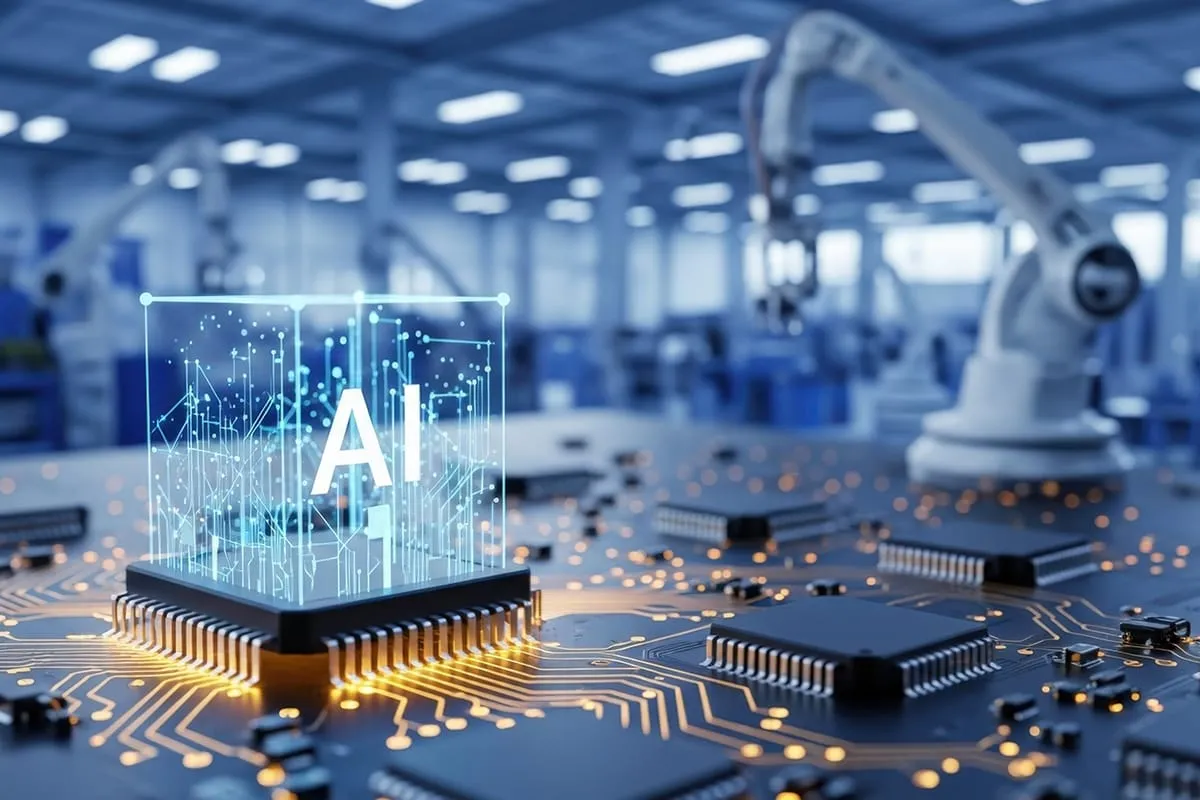
SoftBank’s move signals a shift: robotics hardware with embedded AI will become the new norm.
By folding ABB’s robotics unit (7,000 employees, ~$2.3B revenue) into its Physical AI ambitions, SoftBank strengthens its ability to inject learning, perception, and autonomy directly into robot controllers and edge modules.
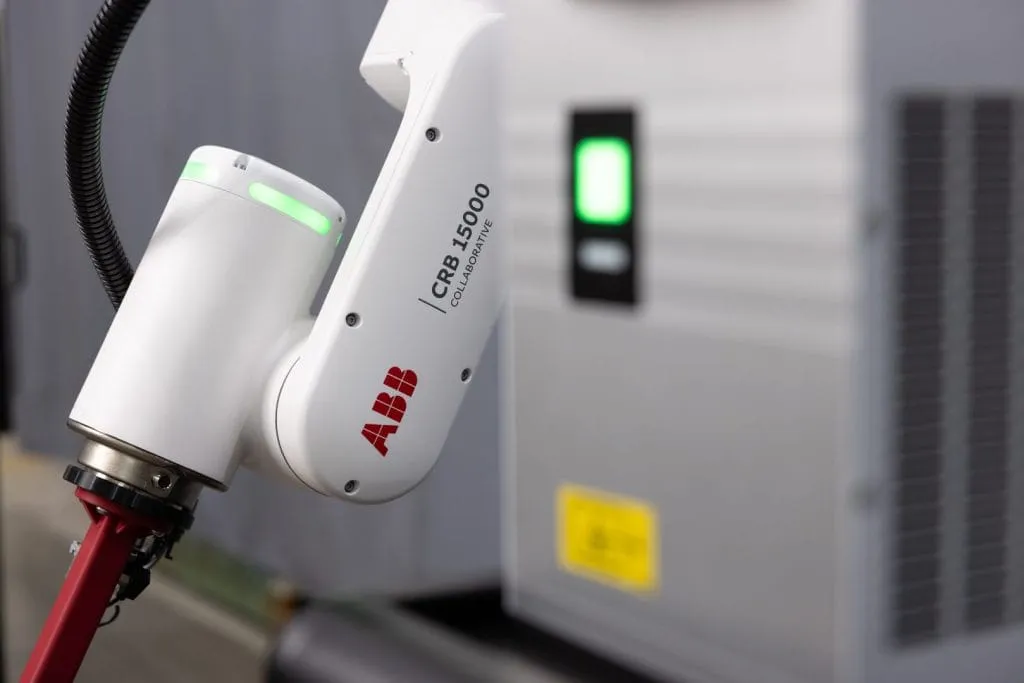
“SoftBank’s next frontier is Physical AI. Together with ABB Robotics, we will unite world-class technology and talent under our shared vision to fuse Artificial Super Intelligence and robotics — driving a groundbreaking evolution that will propel humanity forward.”
Masayoshi Son, Chairman & CEO of SoftBank Group Corp., on the Acquisition of ABB Ltd’s Robotics Business.
For incumbents and newcomers alike, the bar is raised: beyond better torque, repeatability, and safety, systems must now self-calibrate and adapt in real time.
In HardTech engineering, this is a continuation of adapting to complex, emerging technologies. Our work is to transform new intelligence into dependable, verifiable systems for the real world. As Physical AI takes shape, that work now means expanding our disciplines to be AI-centered, designing, testing, and verifying systems where learning itself becomes part of the engineering problem.
ABB could have spun out the unit or pursued an IPO. Instead, it chose a buyer built around AI scale. SoftBank’s robotics history (for example, Pepper) and its portfolio exposure to logistics and service systems, paired with ABB’s channels and field service, turn a carve-out into a scale-up.
SoftBank isn’t just buying robots; it’s acquiring the roadmap, customer access, and service expertise to accelerate what comes next.
The advantage in robotics no longer goes to those who build the best mechanical arms, but to those who design the most intelligent, connected, and adaptable automation architectures.
With SoftBank’s backing, ABB’s robotics unit becomes an anchor in its automation stack.
We may see:
For HardTech engineers, this convergence means that automation must reconcile distributed intelligence, connected systems, and evolving software dependencies with the demands of safety and traceability. That’s the re-architecture driving the future of industrial robotics.
HardTech is what turns breakthrough ideas into reliable, manufacturable products. It’s where bespoke hardware, complex subsystems, and new processes solve challenges with no playbook.
The advantage in robotics no longer goes to those who build the best mechanical arms, but to those who design the most intelligent, connected, and adaptable automation architectures. | Trent Waddell, Senior Director of Automation & Robotics, Andrews Cooper
Integrating adaptive AI into regulated automation is anything but simple. Standards and infrastructure rarely move as fast as the models.
Key risks include:
These risks are friction points every innovator will face. What matters now is how quickly teams can turn that friction into foresight. In HardTech, that’s our work: anticipating system stresses early, designing for safe adaptation, and proving reliability long before it’s required.
The challenges and opportunities emerging with Physical AI are reshaping every corner of the robotics industry. From incumbents to startups, integrators to investors, success now depends on aligning engineering rigor with adaptive intelligence.
Whether designing, integrating, or investing, success with Physical AI hinges on developing intelligent systems that connect software, data, and hardware into dependable automation.
Every signal in the market points to the same reality: automation and intelligence are converging faster than standards or infrastructure can keep up.
SoftBank’s acquisition of ABB Robotics reads like a press release for the next chapter of industrial automation: the age of AI-native robotics. Their investment is a bet on robots that not only move but think.
This is a paradigm shift that will redefine the decade ahead, when we’ll likely see:
At Andrews Cooper, we help teams translate these AI shifts into grounded, testable automation strategies through architecture choices, verification plans, and integration paths that make adaptive systems dependable from day one.
Have an "impossible" problem to solve? Connect with us to speak with an engineer.