A remarkable variety of products rely on mechanical and control engineering to develop finely-tuned automated systems that can perform precise fine wire/textile manufacturing processes.
From life-saving surgical products like pacemakers and defibrillators, to micro-electronic devices and advanced gaming tech, and smart wearables that integrate different wires, textiles, and electronics, each fine wire/textile product has unique technical requirements, material composition, and automation challenges.
The material required for each fine wire/textile application adds complexity to the design considerations. Products that utilize fine wire or fine textile are defined as such by the diameter of the material:
The manual handling of ultra-thin wires and textiles is not only cumbersome and inefficient, but manufacturing can also be highly complex and prone to human and/or machine errors.
Automation creates a balanced and efficient system of coordinated vision, guidance, and tension control to suit the specific type of wire or textile, achieving repeatable quality and higher speed production.
Even with existing automated systems, upgrading components and refining the precision handling of the material generates improved performance and production efficiency.
Successful automation of fine wires and textiles depends on many interrelated factors, such as:
Below are some of the technical considerations our engineers weigh when designing or improving an automated fine wire and fine textile handling system.
High-quality vision systems and their integration are critical components of custom fine wire and textile automation systems. Each application has a specific set of requirements that impacts the performance of the system, from the manufacturing environment down to the composition of the wire or textile. To select an effective vision system, evaluating and designing for your project’s unique specifications is important.
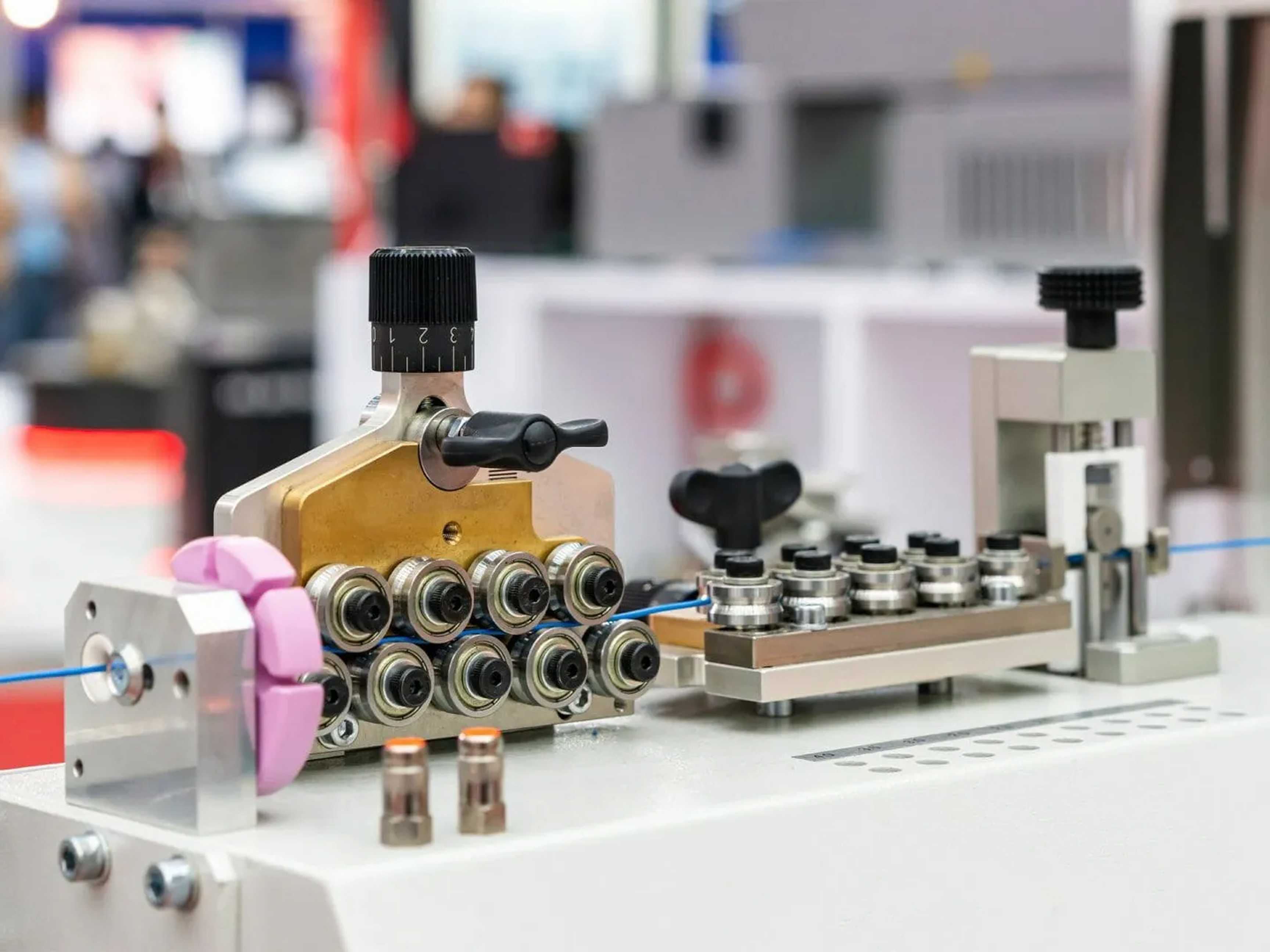
The type of material composition affects multiple areas of a wire handling system.
Three potential sources of vibration can affect a vision system’s efficiency: wire, wire mount, and camera mount.
In addition, the root cause of the vibration (the wire interacting with the guide) can damage it. Different guidance hardware has different effects on vibration and should be selected with the composition of the wire in mind to reduce overall vibration.
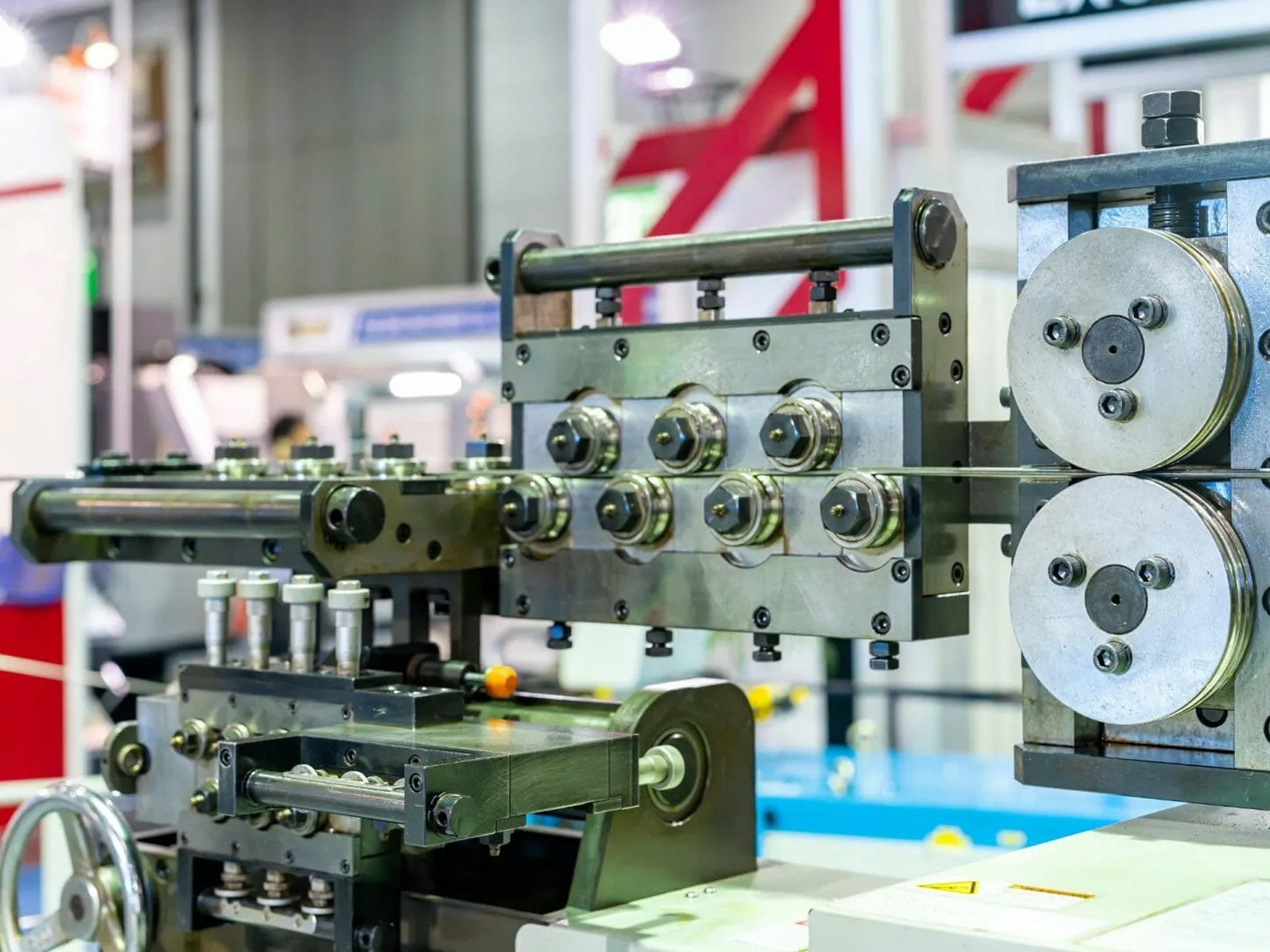
During the manufacturing process, the fine wire will often undergo multiple changes of direction. Some examples of guidance hardware options used to achieve this direction change are included below.
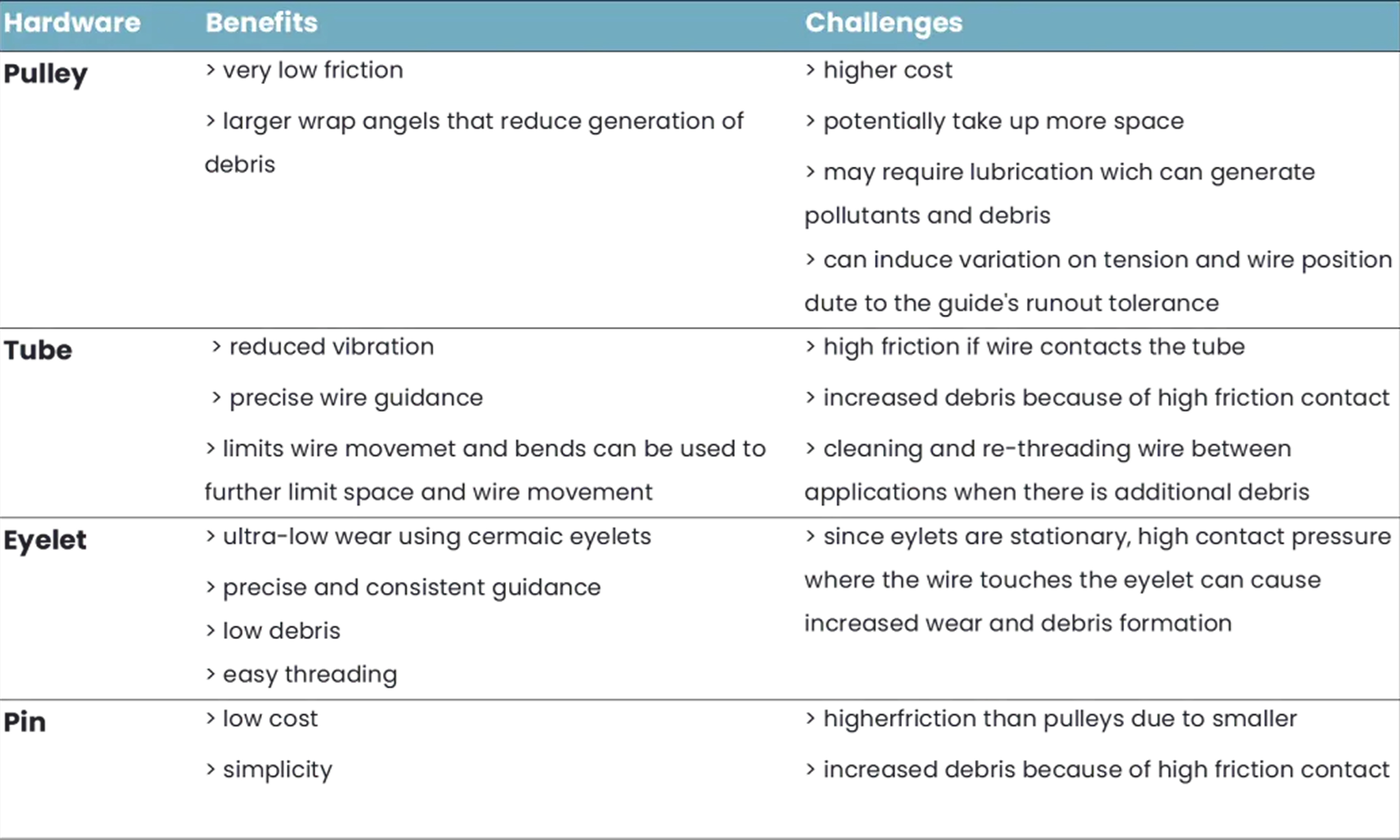
During continuous wire fabrication, debris can build up and cause potential issues such as wire breakages. The amount of debris generated is directly related to the type of guidance hardware used as well as the type of wire. Some textiles and wires are more resistant to abrasion and therefore will produce less debris, but in some cases, debris generation is inevitable.
Tension is also impacted by debris buildup in your system. Understanding where and how debris is generated allows you to make effective design choices.
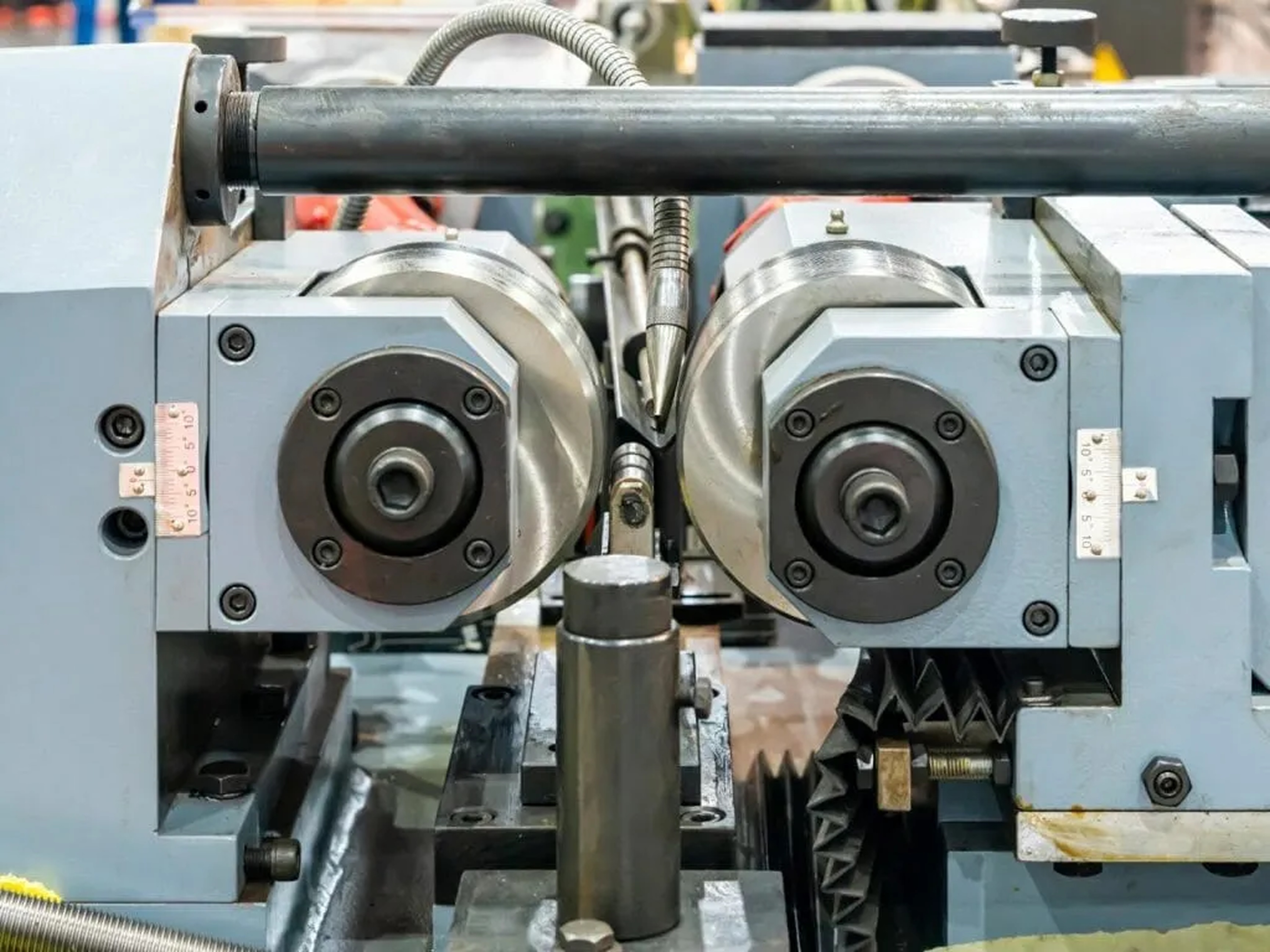
To understand the complexity of fine wire/textile tension control, let’s start with a classical engineering question. Imagine you have a bucket at the end of a rope, which is on the end of several pulleys attached to a wall. What is the tension of your line at the bucket and what is the tension of your line at the wall where it is tied off? When it comes to this kind of engineering problem, the answer is the tension is the same at both locations.
But with fine wire handling, the tension is going to be different throughout the system. Although the tension of your wire is the same from one inflection point to the other, it will always be different on either side of the inflection point: it is always additive because friction is always additive. Tension increases from its source until it hits the end of the line – this is a critical design issue to resolve.
Further complicating the design, when multiple wires and paths interact with each other, each one needs to be calculated depending on the unique specifications of the system.
Understanding how to apply engineering principles to balance the tension across critical points directly improves the integrity of the system.
Selecting the right tensioner is critical to the proper handling of fine wires/textiles, otherwise incorrect tensioning can result in wire breakages.
Additional contributing factors, like variation in the circularity of the source spool or upstream slowdowns/stoppages, further increases the need to maintain correct tension during production.
Several mechanisms help to design tension control into the system, some of which are described below:
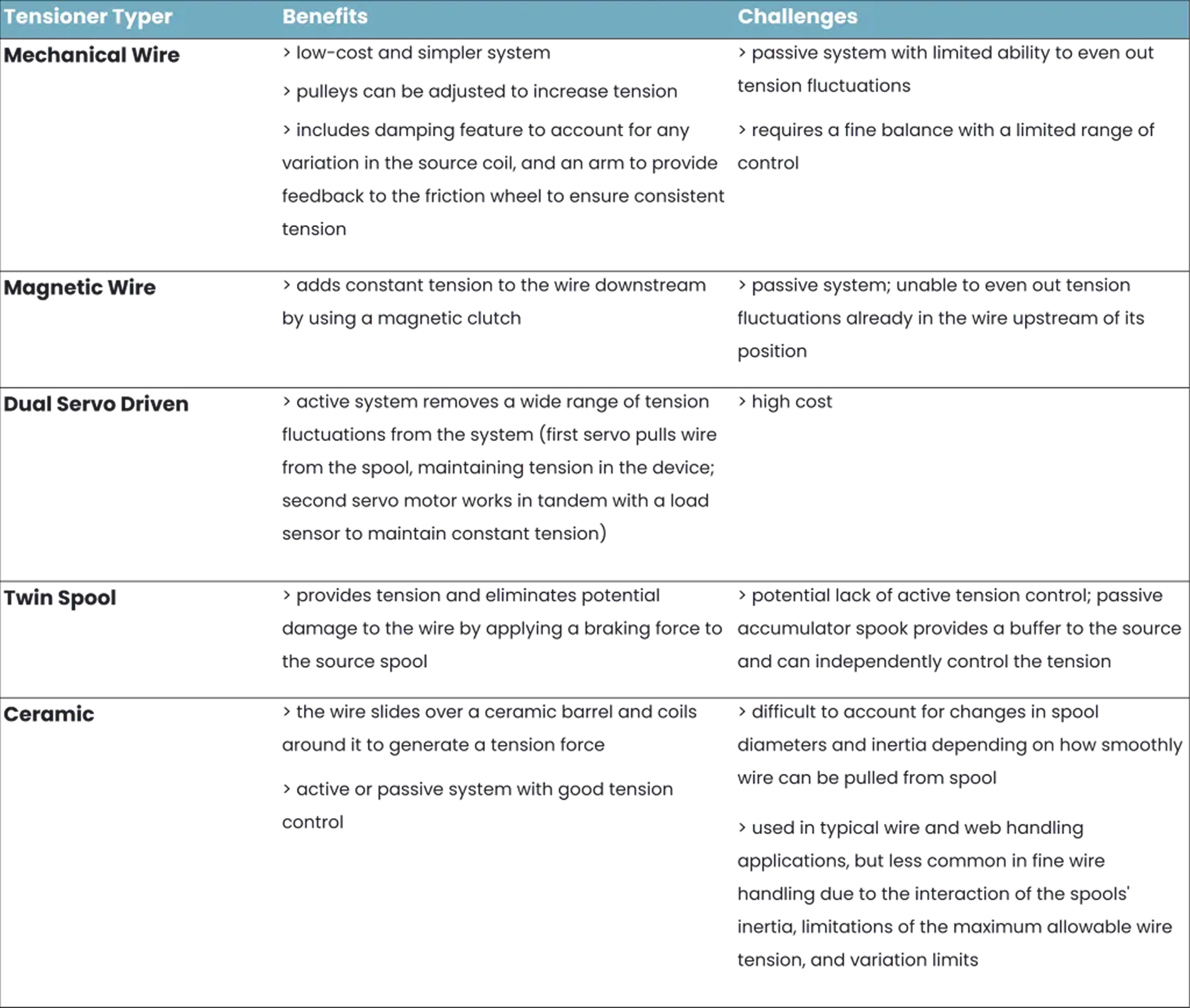
The tension of the wire through the system is dependent on its path as well as the selected tensioners. The more direction changes, the more the tension will be increased by the end of the path.
To reduce this friction, it is important to limit the number of bends in the path and the angle of inflection of the wire at each bend. The radius should still be kept as large as possible to limit the forced induced in the wire. Too small of radius can cause the material to work harden or/or fracture, depending on the material.
In addition to the wire path of the system, consider the direction off the source of material, which can lead you to select one type of spool over another.
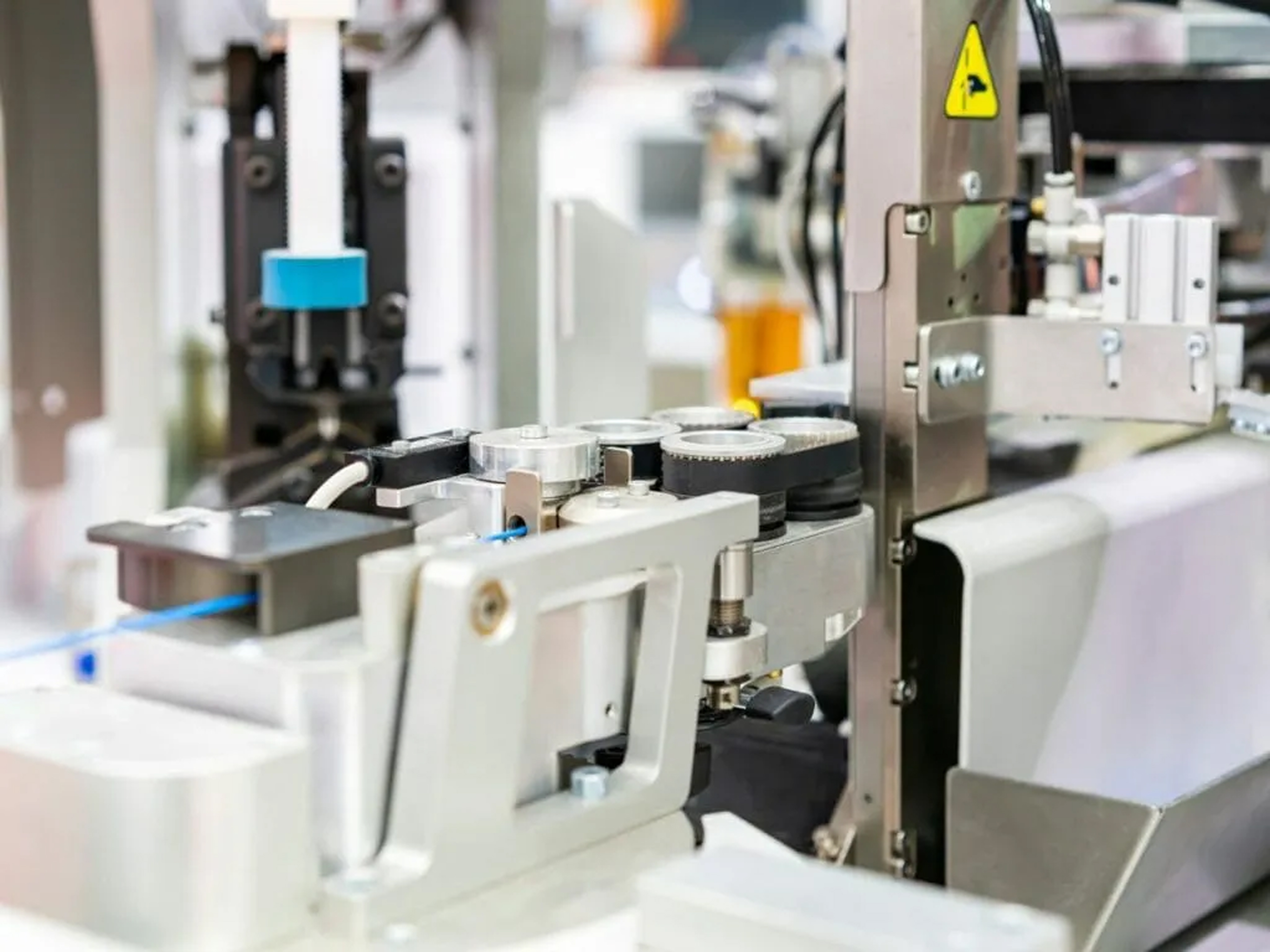
Even when a fine wire/textile system is designed for optimal performance, it’s critical to consider the full operational needs of the process. What happens when material runs out or the unexpected when a wire breaks during production? Automation of fine wire/textile handling should be flexible enough to handle the termination, replenishment, and rethreading of fine wire and textiles for maximum uptime.
When a wire runs out during production, it needs to be replenished. An operator can replace a spool or tie a knot where the wire ran out (or broke) when applicable to the product. But access points should be designed in the wire path to enable the operator to maneuver. Very fine wires may also result in a time-consuming rethreading process without careful planning. Other considerations can include:
If a product changeout requires significant differences in wire diameter, strength, or stiffness, the machine will need to be reconfigured. It is optimal for the system to be reconfigurable without having to change too much hardware. In some cases, automated reconfiguration is recommended to make the process as painless and efficient as possible.
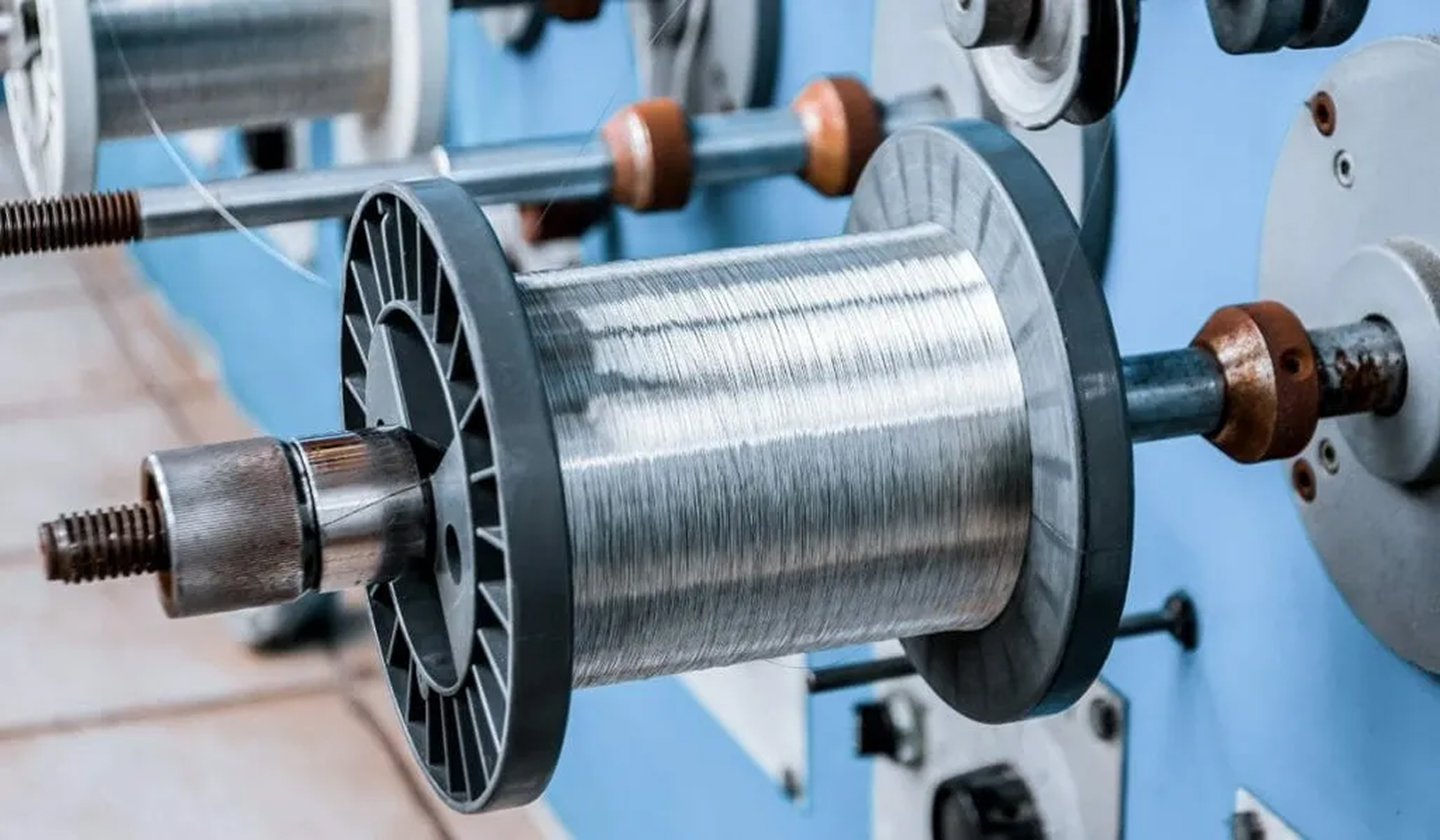
Whether you're moving from a manual process or refining an existing automated system, the same principles apply. Fit the vision system and guidance hardware to the wire or textile, keep tension balanced across the path, and design for quick replenishment. The result is a fine wire and textile handling system that runs reliably, shift after shift.