

In this series on Hardware Test Engineering, we've discussed how involving hardware test engineers early in the design phase prevents costly revisions and streamlines development. As your product transitions from concept to prototype, testing evolves beyond concept validation to drive design optimization throughout the product development (PD) life cycle.
By collaborating closely with clients and PD engineers from the outset, hardware test (HWT) engineers validate critical design elements, detect issues early, and keep development on track. This early integration accelerates the iterative process, ensuring efficient design refinement at every stage.
Each product’s unique requirements and constraints guide testing at every stage. By aligning test strategies with the product's use case, design goals, and limitations, HWT engineers prioritize core functionality, focusing on:
Read about solving haptic interference in small form factor devices:
As the demand for compact form factors grows, tighter error tolerances leave minimal margin for error. When developing systems like optical devices or densely packed electronics, involving test engineering early ensures that designs account for future testing needs, enabling better access to critical components and reducing the risk of costly redesigns or failures. This early integration also enhances the product’s Design for Test (DFT), streamlining later-stage testing even in compact, densely packed systems like optical devices or electronics.
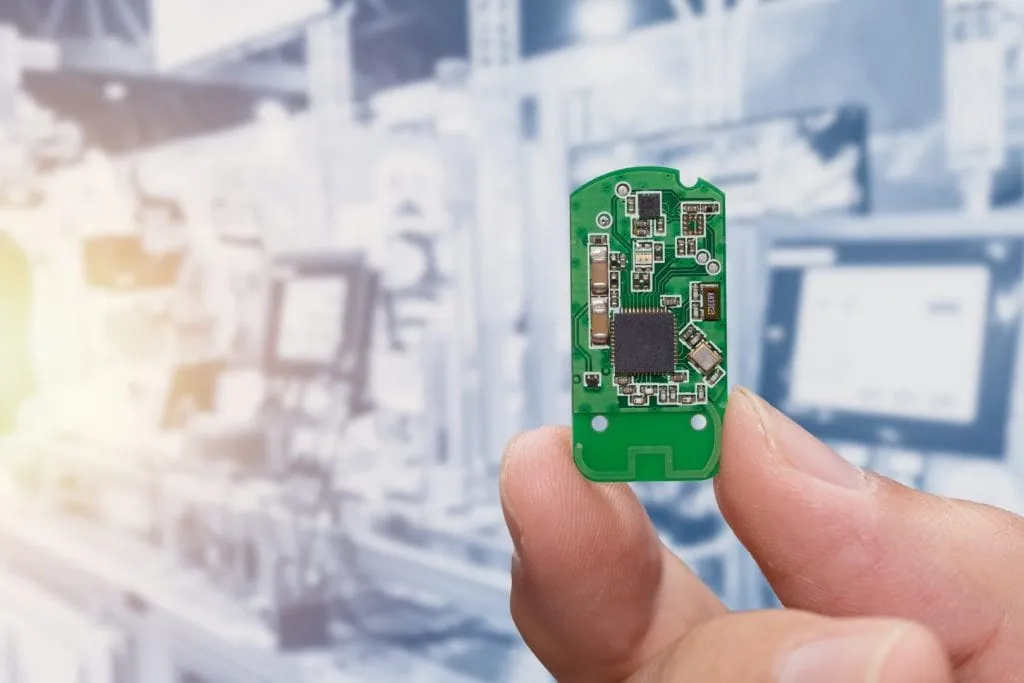
This early integration also enhances the product’s Design for Test (DFT), streamlining later-stage testing even in compact, densely packed systems like optical devices or electronics.
Soft-tooled prototypes, typically 3D-printed or machined, enable rapid iteration but often differ from final production materials, affecting performance under real-world conditions. HWT engineers adapt testing strategies as the design evolves from soft-tooled to production-quality prototypes to ensure that the insights gathered during earlier tests apply accurately to the final product.
Prototypes are essential for validating design assumptions and testing real-world performance but are often costly and limited in supply. To preserve each prototype for further testing and avoid premature waste, test engineers strategically sequence testing to maximize efficiency and ensure optimal use throughout the development cycle. Examples such as:

Automation enhances speed, precision, and efficiency in testing, eliminating the need for manual monitoring while generating real-time data. This accelerates runtimes and increases testing capacity, enabling faster, more accurate results. Additionally, customized test equipment can be designed for reuse, increasing automation’s ROI.
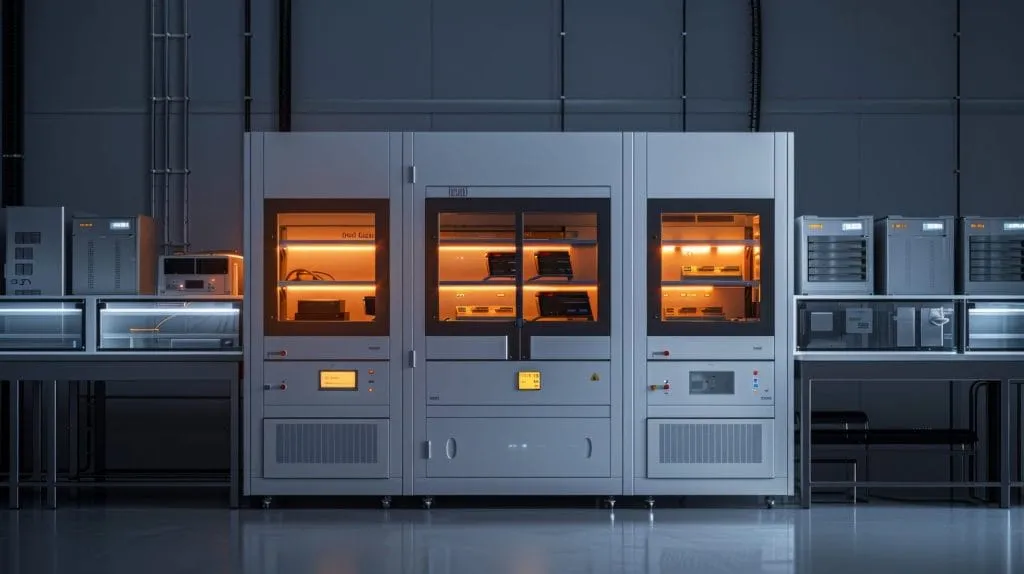
Automated environmental testing to increase test speed and enable automatic performance inspections
To preserve each prototype for further testing and avoid premature waste, test engineers strategically sequence testing to maximize efficiency and ensure optimal use throughout the development cycle.
At each stage of the PD life cycle, as the scope and scale of testing take on greater significance, our test team works to ensure a rapid test-and-iterate design process. Here’s how various test strategies are focused throughout the PD life cycle:
In the PoC stage, the goal is to validate whether the core concept works. HWT engineers work alongside PD engineers to develop a focused test strategy to confirm the product’s initial design.
Find out more about the advantages of early testing: Integrating Hardware Test Early in the Design Phase

Early key performance testing prevents unexpected redesign
Find out more about Design Validation within the PD life cycle.

Once the product concept is proven, HWT and PD teams collaborate to refine the design and prioritize tests for improvements. System-level testing, such as module or board-level evaluations, helps guide rapid iterative design.

In the DV stage, the number of tests increases significantly as the product approaches production readiness. HWT engineers work to validate system-level performance and production feasibility.
In the final stage of PV, the number of testable prototypes becomes critical, as a larger quantity of samples is needed to establish quality control and account for process variation.
Partner with Andrews Cooper to integrate a tailored HWT strategy that accelerates your product’s path to market. Our cross-discipline teams ensure seamless collaboration, strategic validation, and optimized performance at every phase of development. Engage with us early to drive innovation, reduce risk, and guarantee the highest quality in your final product.